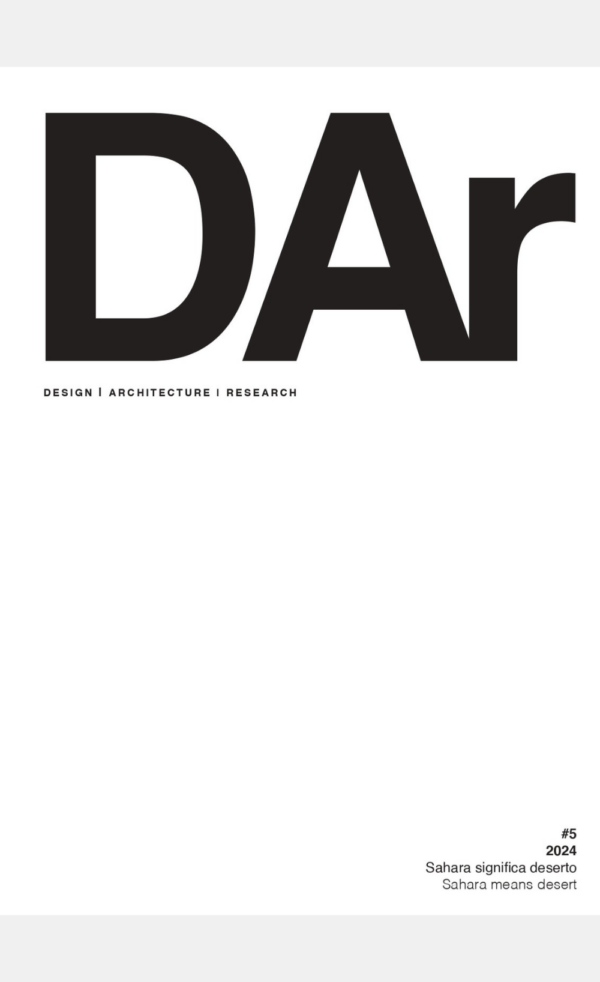
#5 Sahara significa deserto – Sahara means desert
0,00€
-In arabo sahrā’ significa “deserto”. Anzi, è una delle numerose parole arabe che, insieme a bādiyya, barriya, baydā’, sabsab, ‘arā’, flāt, mafāza, fayfā’, raml non solo significano “deserto”, ma, soprattutto, lo descrivono.
Mentre ṣaḥrā indica un territorio pianeggiate e arido, raml è usato per descrivere l’enorme distesa di sabbia che l’immaginario collettivo occidentale riconosce come deserto, bādiyya è lo spazio di insediamento dei beduini che, soli, sono in grado di attraversare la barriya, un’area irta di ostacoli (geografici e non). Se dunque in alcune lingue europee il termine “deserto” fa riferimento a uno spazio ostile, non abitabile, pressoché vuoto e, forse a ragione, pericoloso, in arabo ṣaḥrā indica paesaggi e luoghi abbondantemente caratterizzati da presenze variegate in termini antropici, topografici, architettonici.
Mutuando i punti di vista delle culture islamiche – in cui forme di vita nomade tipiche del deserto coesistono da secoli con quelle sedentarie degli insediamenti urbani – le culture occidentali, prima attraverso il linguaggio e poi attraverso secoli di colonizzazione, hanno contribuito a formare un’idea distorta del deserto, mistificandone i veri significati e aprendo la strada allo sfruttamento di un territorio tanto vasto quanto ricco di vita e risorse.
Ed è proprio una diversa descrizione del deserto – o dei deserti – e delle loro architetture l’obiettivo di questo numero, che intende andare oltre le barriere linguistiche che ne hanno ingabbiato la ricchezza e la diversità di significato, suggerendo, sulla scia di studi recenti e meno recenti (si vedano le recensioni ai libri proposti in chiusura del volume),una lettura alternativa di un’area geografica complessa e sempre più in espansione. Più nello specifico, questo numero di DAr intende contribuire a riconsiderare il deserto come uno spazio non vuoto e privo di vita, ma, anzi, come una condizione che, storicamente, ha ospitato la vita dell’uomo nelle sue manife stazioni insediative fondamentali e ha stimolato lo sviluppo di numerose civiltà, adattando gesti e rituali, architetture individuali e collettive, attività produttive e relazioni sociali, mitologie e immaginari alle caratteristiche del suo ambiente eterogeneo.
-In Arabic, sahrā’ means “desert”. Sahrā’ is rather one of the numerous Arabic words that, together with bādiyya, barriya, baydā’, sabsab, ‘arā’, flāt, mafāza, fayfā’, raml do not only mean “desert”, but, more importantly, describe it. While ṣaḥrā stands for a flat and arid territory, raml is used to indicate the enormous expanse of sand that the Western collective imagination recognises as desert, and bādiyya is the space of the Bedouins who, alone, can cross the barriya with their livestock, an area fraught with obstacles (geographical and otherwise). If in some European languages the term “desert” refers to a hostile, uninhabitable, almost empty and, perhaps justifiably, dangerous space, in Arabic ṣaḥrā indicates landscapes and places abundantly characterised by varied presences in anthropic, topographic, and architectural terms.
Appropriating the views of Islamic cultures – where nomadic forms of living typical of the desert regions coexisted for centuries with sedentary urban settlements — Western cultures have contributed to forming a distorted idea of the desert, mystifying its meanings and paving the way for exploiting a vast territory prosperous in life and
resources, first through language and then through centuries of colonisation.
The aim of this issue is precisely to offer a
different description of the desert – or the deserts – and their architectures, trying to go beyond the linguistic barriers that have constrained its richness and diversity of meaning while suggesting, in the wake of recent and less
recent studies (see the reviews of the books at the end of the volume), an alternative reading of a complex and increasingly expanding geographical area. More specifically, this issue of DAr intends to contribute to reconsidering
the desert as a space that is not empty or devoid of life but, instead, a condition that has historically hosted human life in its fundamental settling manifestations and has stimulated the development of numerous civilisations,
who adapted gestures and rituals, individual and collective architectures, productive activities and social relations, mythologies and imaginaries to the characteristics of its heterogeneous environment.
| Editore | PUP |
|---|---|
| Tipologia | |
| ISSN | 2785-3152 |
Prodotti correlati
-
#2 Le città del mondo islamico – Cities of the Islamic world
0,00€Scegli Questo prodotto ha più varianti. Le opzioni possono essere scelte nella pagina del prodotto -
#7 L’abitare migrante nella città dell’inclusione – Migrant inhabiting in the city of inclusion
0,00€Scegli Questo prodotto ha più varianti. Le opzioni possono essere scelte nella pagina del prodotto -
#4 Pedagogie. Insegnare il progetto di architettura – Pedagogies. Teaching architectural design
0,00€Scegli Questo prodotto ha più varianti. Le opzioni possono essere scelte nella pagina del prodotto -
#1 Quale mondo islamico? – Which Islamic World?
0,00€Scegli Questo prodotto ha più varianti. Le opzioni possono essere scelte nella pagina del prodotto