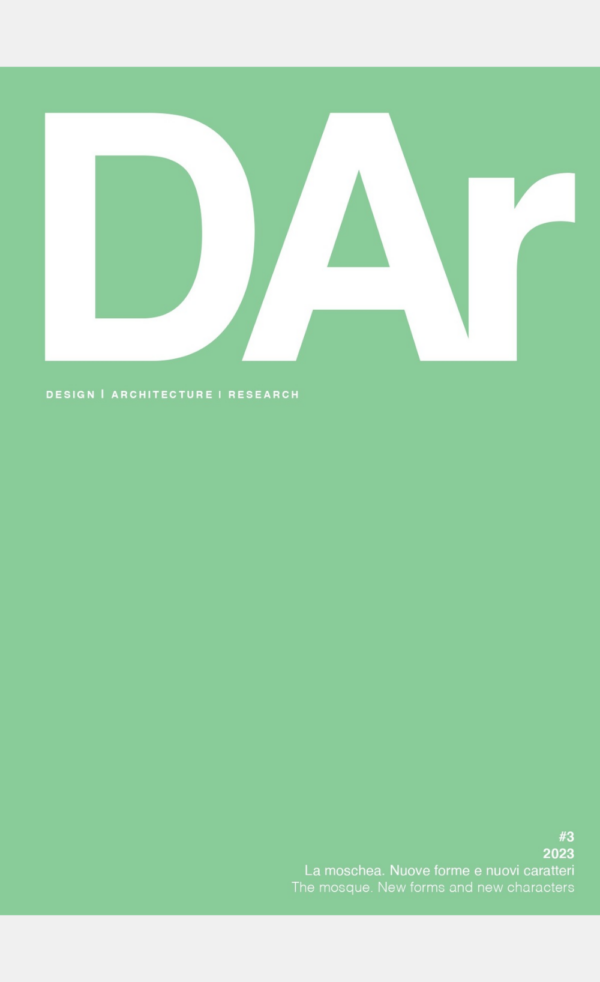
#3 La moschea. Nuove forme e nuovi caratteri – The mosque. New forms and new characters
0,00€
-La pluralità di voci cui è stato affidato questo terzo numero ha dimostrato la ricca varietà di punti di vista attraverso cui è possibile innescare un dibattito culturale ai fini dell’avanzamento della ricerca scientifica sulle questioni centrali dell’architettura del mondo islamico.
Abbiamo invitato Stefano Allievi ‒ professore di Sociologia e direttore del Master sull’Islam in Europa presso
l’Università di Padova ‒ per una riflessione sul diritto alla libertà religiosa e una lettura della situazione contemporanea nelle nostre città europee nei confronti delle comunità islamiche. «A che cosa serve una moschea?» è l’interrogativo con il quale Allievi apre la questione della moschea come forma di appropriazione simbolica di
un territorio, descrivendo le frequenti resistenze alla costruzione di un edificio per il culto islamico in città europee, fenomeno che prende il nome di “islamofobia”. Alla domanda di Allievi sembra rispondere Salma Samar Damluji nell’intervista di Viola Bertini, sottolineando anzitutto che la moschea non è solo un edificio che rappresenta i valori di una specifica cultura, non costruisce solo il luogo del culto islamico bensì uno spazio che tiene insieme la dimensione collettiva e pubblica della città, non un elemento isolato ma in stretta relazione con l’urbano: il suo rapporto con la città è indissolubile.
La città islamica di matrice araba è il frutto di un disegno urbano complesso fatto di strade sinuose strettissime, case assemblate l’una all’altra che formano un sistema poroso densissimo in cui emergono delle grandi eccezioni costituite da alcuni edifici più importanti, destinati ad attività collettive come la moschea, il mercato, la madrasa, il bagno pubblico, tutti strettamente connessi.
È proprio da questo concetto di spazio “aperto”, di relazioni fisiche e simboliche che si è inteso incentrare questo terzo numero di DAr, affinchè si potesse riflettere sul più importante tema architettonico della cultura islamica non solo per continuare ad interrogarci sulle grandi lezioni di composizione che si possono trarre da alcuni straordinari edifici come le grandi moschee/città di Baghdad, le moschee/monumento del Cairo, l’ipostilo della mezquita di Cordoba, o le grandi aule voltate a cupola delle moschee ottomane, ma soprattutto per comprendere su cosa debba rappresentare oggi questo spazio, anche in contesti occidentali, dove costruire una moschea in una città non islamica significa, ancora secondo Salma Samar Damluji, «realizzare uno spazio aperto alla contemplazione e all’apprendimento, con giardini e fontane islamici, non solo per i musulmani, ma uno spazio perfettamente ed elegantemente progettato per aumentare il livello di comprensione delle qualità rispettabili e modeste che un tale spazio può offrire alla comunità nel creare luoghisociali e culturali confortevoli»
-The diversity of voices entrusted with this journal’s third issue exemplified the rich diversity of perspectives that can spark a cultural debate to advance scientific research on the central issues of architecture in the Islamic world.
We invited Stefano Allievi ‒Professor of Sociology and Director of the Master’s Degree Course on Islam in Europe
at the University of Padua ‒ for a reflection on the right to religious freedom and a reading of the current situation regarding Islamic communities in our European cities. «What is the purpose of a mosque?» is the question with which Allievi introduces the issue of the mosque as a form of symbolic appropriation of territory, describing the frequent opposition to the construction of a building for Islamic worship in European cities, a phenomenon known as “Islamophobia”. Salma Samar Damluji appears to answer Allievi’s question in Viola Bertini’s interview by emphasising, first and foremost, that the mosque is not simply a building that represents the values of a specific culture; it is not simply a place of Islamic worship, but a space that holds together the collective and public dimensions of the city, not an isolat ed element but in close relationship with the urban: its relationship with the city is inseparable.
The Islamic city of Arab origin is the result of a complex urban design comprised of narrow, winding streets and hous es stacked one on top of the other, forming a dense, porous system from which large exceptions consisting of a few more important buildings, destined for communal activities such as the mosque, the market, the madrasa, and the public baths, emerge.
This third issue of DAr was intended to focus on this concept of “open” space, of physical and symbolic relations, in order for us to reflect on the most important architectural theme of Islamic culture, not only to continue questioning ourselves on the great compositional lessons that can be gleaned from such extraordinary buildings as the great mosques/cities of Baghdad, the mosques/ monuments of Cairo, and Cordoba’s hypostyle of the mezquita or the great domed vaulted halls of the Ottoman mosques; but also to consider the significance of what this space should represent today, even in Western contexts, where building a mosque in a non-Islamic city means, again according to Salma Samar Damluji, «to create a space open to contemplation and learning, with Islamic gardens and fountains, not only for Muslims, but a space perfectly and elegantly designed to raise the level of understanding of the respectable and modest qualities such a space can offer the community in creating comfortable social and
cultural places»
| Editore | PUP |
|---|---|
| Tipologia | |
| ISSN | 2785-3152 |
Prodotti correlati
-
#9 L’immagine della città: fotografia, critica e narrazione – The image of the city: photography, criticism and narration
In preordine · disponibile dal 30 Novembre 2026
Cartaceo 28,00€ - Digitale 0,00€Scegli Questo prodotto ha più varianti. Le opzioni possono essere scelte nella pagina del prodotto -
#4 Pedagogie. Insegnare il progetto di architettura – Pedagogies. Teaching architectural design
0,00€Scegli Questo prodotto ha più varianti. Le opzioni possono essere scelte nella pagina del prodotto -
#1 Quale mondo islamico? – Which Islamic World?
0,00€Scegli Questo prodotto ha più varianti. Le opzioni possono essere scelte nella pagina del prodotto -
#2 Le città del mondo islamico – Cities of the Islamic world
0,00€Scegli Questo prodotto ha più varianti. Le opzioni possono essere scelte nella pagina del prodotto